


The Fear That Holds New Leaders Back
Stepping into a leadership role is exciting, but it can also be intimidating. New leaders often face pressure to perform, make the right decisions, and guide others effectively. Beneath those expectations lies a quiet but powerful fear that holds many new leaders back.
The fear is simple yet deeply personal: the belief that “I am not enough.”
Understanding this fear and learning how to manage it is one of the most important steps in becoming a confident and effective leader.
The “I Am Not Enough” Fear in Leadership
- I am not smart enough.
- I am not experienced enough.
- I am not talented enough.
- I am not the right person for this role.
This internal narrative can appear whenever uncertainty arises. A difficult decision, a major challenge, or a new responsibility can trigger that voice of self-doubt.
The phrase “I am not…” becomes a mental blank that leaders fill with their deepest insecurities.
- Self-confidence
- Leadership presence
- Personal identity as a leader
If left unchecked, this quiet fear can undermine a leader’s ability to guide others and make decisions with clarity.
Why Self-Doubt Is Normal for Leaders
Many people assume confident leaders never struggle with insecurity. In reality, self-doubt is a universal experience.
Leadership often places people in unfamiliar territory. You may be responsible for solving problems you have never encountered before or guiding teams through uncertain situations. Feeling unsure at times is completely natural.
The key difference between effective leaders and struggling leaders is not the absence of doubt. It is how they respond to it. Great leaders learn to challenge the voice that says they are not enough.
How Leaders Can Push Back Against the “I Am Not” Voice
Overcoming self-doubt does not mean becoming perfect. Instead, it involves developing a mindset that allows you to move forward even when uncertainty exists.
Here are several ways leaders can push back against that inner voice.
1. Accept That Perfection Is Not the Goal
Leadership does not require perfection. No leader has all the answers, and mistakes are part of growth. Reminding yourself that you are doing your best in the moment helps quiet the unrealistic expectation that you must always perform flawlessly.
2. Do Not Let Mistakes Define You
Every leader will make mistakes. What matters most is how you respond afterward.
- Take responsibility
- Make amends when necessary
- Reflect on what went wrong
- Learn how to improve next time
A mistake should never become the defining moment of your leadership story. It should become part of your learning process.
3. Stay Grounded in Your Authentic Leadership
One of the most powerful defenses against self-doubt is authenticity. Leaders who know who they are and what they stand for are far less likely to be shaken by moments of uncertainty. Being genuine builds trust with others and strengthens your internal confidence. When you lead according to your values and beliefs, the voice of “I am not” loses much of its power.
The Power of a Leadership Point of View
Another powerful tool for overcoming leadership insecurity is developing a leadership point of view.
- Who you are as a leader
- What experiences shaped your leadership style
- Who influenced your development
- How you expect to lead others
- What standards you hold for yourself and your team
This process helps leaders articulate their purpose and leadership philosophy.
- Why they lead
- What they believe in
- How they choose to guide others
This clarity helps silence the voice that says, “I am not enough.”
Leadership Confidence Is an Ongoing Practice
Even experienced leaders occasionally hear that voice of self-doubt. It is part of being human. The difference is that confident leaders recognize the voice quickly and refuse to let it control their actions.
- They are capable of learning.
- They can recover from mistakes.
- Their leadership is grounded in purpose and values.
Confidence in leadership is not something you achieve once. It is something you practice over time.
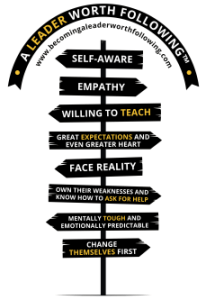
Becoming a Leader Worth Following
The fear of not being enough is common, especially for those who are just beginning their leadership journey. But it does not have to define your leadership. By embracing imperfection, learning from mistakes, staying authentic, and developing a clear leadership point of view, leaders can overcome self-doubt and lead with greater confidence.