
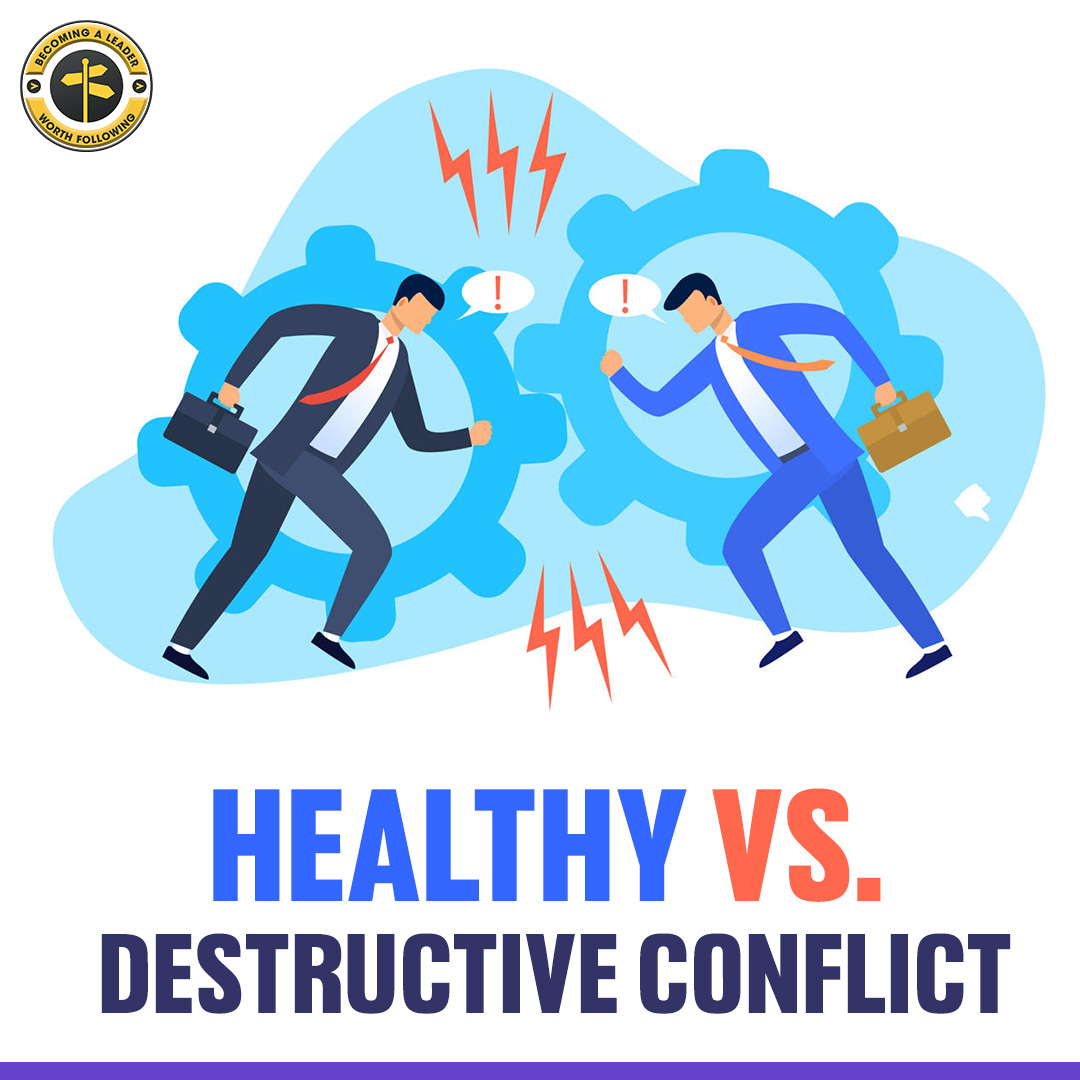
Healthy vs. Destructive Conflict
Conflict is unavoidable in leadership. Any time people bring different perspectives, priorities, and personalities into the same space, tension will surface. The real question is not whether conflict exists, but whether it is helping your team grow or quietly tearing it apart.
Strong leaders do not eliminate conflict – they learn how to understand it and harness it toward improvement.
Why Conflict Isn’t Always a Problem
Many leaders instinctively try to reduce or avoid conflict. That instinct can backfire. Healthy conflict is often the engine behind innovation, better decision-making, and stronger team alignment.
The key distinction lies in how conflict shows up and how people behave within it.
When you look around your team, pay attention not just to the disagreement itself but to the roles people take on during that disagreement. Those roles reveal whether the conflict is productive or destructive.
The Three Roles of Unhealthy Conflict
Destructive conflict tends to follow a predictable pattern. People fall into one of three roles and often cycle between them.
The Victim
This person feels powerless. They may believe they are being treated unfairly or that the situation is happening to them rather than something they can influence.
The Persecutor
This role is marked by blame, criticism, and control. The persecutor often positions themselves as right while framing others as wrong.
The Rescuer
The rescuer steps in to fix things, often without being asked. While it may seem helpful, this role can actually reinforce dysfunction by preventing others from taking responsibility.
These roles create a loop. People move between them, feeding the conflict rather than resolving it. Energy shifts away from solving the problem and toward protecting ego, assigning blame, or avoiding discomfort.
When you see this pattern, the conflict is no longer productive. It is becoming damaging.
The Shift to Healthy Conflict
Healthy conflict does not eliminate tension. It transforms it.
Instead of operating from reaction and defensiveness, people shift into more constructive roles:
The Creator
The victim becomes the creator. Instead of focusing on what is happening to them, they focus on what they can do next. There is a sense of ownership and agency.
The Challenger
The persecutor becomes the challenger. Instead of attacking others, they push ideas forward. They question assumptions, raise standards, and invite better thinking without tearing people down.
The Coach
The rescuer becomes the coach. Rather than fixing problems for others, they support growth. They ask questions, encourage accountability, and help others find their own solutions.
What Healthy Conflict Looks Like in Practice
When a team operates in these roles, the tone of conflict changes noticeably.
Conversations become more open and less defensive. People show curiosity instead of judgment. There is a willingness to listen, adapt, and find common ground.
Instead of creating more problems, the team focuses on solving them. Disagreements lead to better outcomes rather than lingering tension.
Most importantly, people leave the interaction feeling stronger, not diminished.
How Leaders Can Spot the Difference Quickly
In the moment, you do not need a complex framework to evaluate conflict. You need awareness.
Ask yourself:
- Are people taking ownership or avoiding it?
- Is the conversation focused on solutions or blame?
- Are individuals trying to control, fix, or collaborate?
- Do people seem defensive or open-minded?
The answers will point you in the right direction.
If you notice victim, persecutor, or rescuer dynamics, it is a signal to step in and redirect. Encourage ownership, reframe criticism into constructive challenge, and guide helpers into coaching rather than rescuing.
Conflict Is a Leadership Signal
Conflict is not just something to manage. It is something to interpret and use for positive outcomes.
Every disagreement gives you insight into your team’s mindset, culture, and emotional intelligence. It shows you whether people feel empowered, whether they trust each other, and whether they are aligned around growth.
When you learn to recognize the roles people play, you gain a simple but powerful tool for turning conflict into progress.