
How to Develop Self-Awareness as a Leader
Self-awareness is often described as one of the most important leadership skills. But what if you don’t realize you’re lacking it?
That’s the challenge with self-awareness. By definition, it’s difficult to recognize what you can’t see. Many leaders unknowingly have blind spots that affect their communication, decision-making, and relationships. The good news is that self-awareness isn’t something you’re born with; it’s a skill that can be developed with intention and practice.
Why Self-Awareness Matters in Leadership
Great leadership isn’t just about vision, strategy, or technical expertise. It’s about understanding how your actions, emotions, and behaviors affect the people around you.
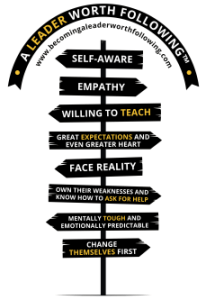
Becoming a Leader Worth Following explores eight key characteristics of effective leadership:
- Self-awareness
- Empathy
- A willingness to teach
- Great expectations paired with an even greater heart
- Facing reality
- Owning your weaknesses and asking for help
- Being mentally tough and emotionally predictable
- Changing yourself first
While each of these qualities is essential, self-awareness is the foundation they all build upon. Without it, growth becomes difficult because you can’t improve what you don’t recognize.
The First Step: Understand That You Leave a Wake
One of the most powerful ways to begin developing self-awareness is by recognizing a simple truth:
You leave a wake.
Imagine a boat moving across a lake. As it travels, it creates waves behind it. Small boats leave gentle ripples. Larger boats create wakes that can rock nearby boats or even capsize them.
Leadership works the same way.
Whether you realize it or not, your words, decisions, attitudes, and emotions create a ripple effect on everyone around you. Every interaction leaves an impression. Every conversation influences someone else’s experience.
The first step toward becoming more self-aware is accepting that your leadership has an impact, even when you don’t immediately see it.
When leaders recognize that they leave a wake, they naturally begin asking better questions:
- How did that meeting affect my team?
- Did my response encourage or discourage others?
- What kind of environment am I creating?
Those questions are the beginning of genuine self-awareness.
Learn to Recognize Your Emotional State
Self-awareness isn’t only about understanding your impact on others. It’s also about understanding what’s happening inside of you.
Many people experience emotions without ever slowing down long enough to identify them. Anger, frustration, fear, disappointment, anxiety, or excitement can influence our behavior before we’re even conscious of them.
Developing emotional awareness means learning to notice those feelings in real time.
One helpful technique is to mentally step outside yourself for a moment, almost as if you’re watching yourself in a movie.
Ask yourself:
- What am I feeling right now?
- Why am I reacting this way?
- What is this emotion trying to tell me?
This type of internal dialogue creates space between your emotions and your actions. Instead of simply reacting, you become intentional in how you respond.
Your Emotions Provide Valuable Information
Emotions aren’t the enemy; they’re information.
Frustration may reveal that expectations weren’t communicated clearly. Fear might indicate uncertainty or lack of preparation. Anger could signal that one of your core values feels threatened.
Rather than ignoring emotions or allowing them to control your behavior, self-aware leaders become curious about them.
When you learn to identify your emotions early, you’re far more likely to respond thoughtfully instead of reacting impulsively.
Becoming More Self-Aware Is a Lifelong Journey
No leader ever reaches perfect self-awareness.
Even experienced leaders continue discovering blind spots, learning from feedback, and growing through experience. The goal isn’t perfection – it’s progress.
Developing self-awareness begins with two simple practices:
- Recognize that your leadership always leaves a wake.
- Pay attention to your emotions and what they’re communicating.
As you become more aware of both your impact on others and your internal emotional landscape, you’ll make better decisions, build stronger relationships, and become the kind of leader others genuinely want to follow.
Final Thoughts
If you’re wondering whether you lack self-awareness, asking the question is already a positive sign. Truly self-aware leaders remain curious about themselves, seek feedback, and continually evaluate how they influence those around them.
Leadership starts with leading yourself first. The more you understand your own thoughts, emotions, and behaviors, the more effectively you’ll lead everyone else.