
The Leadership Principle That Creates Real Change
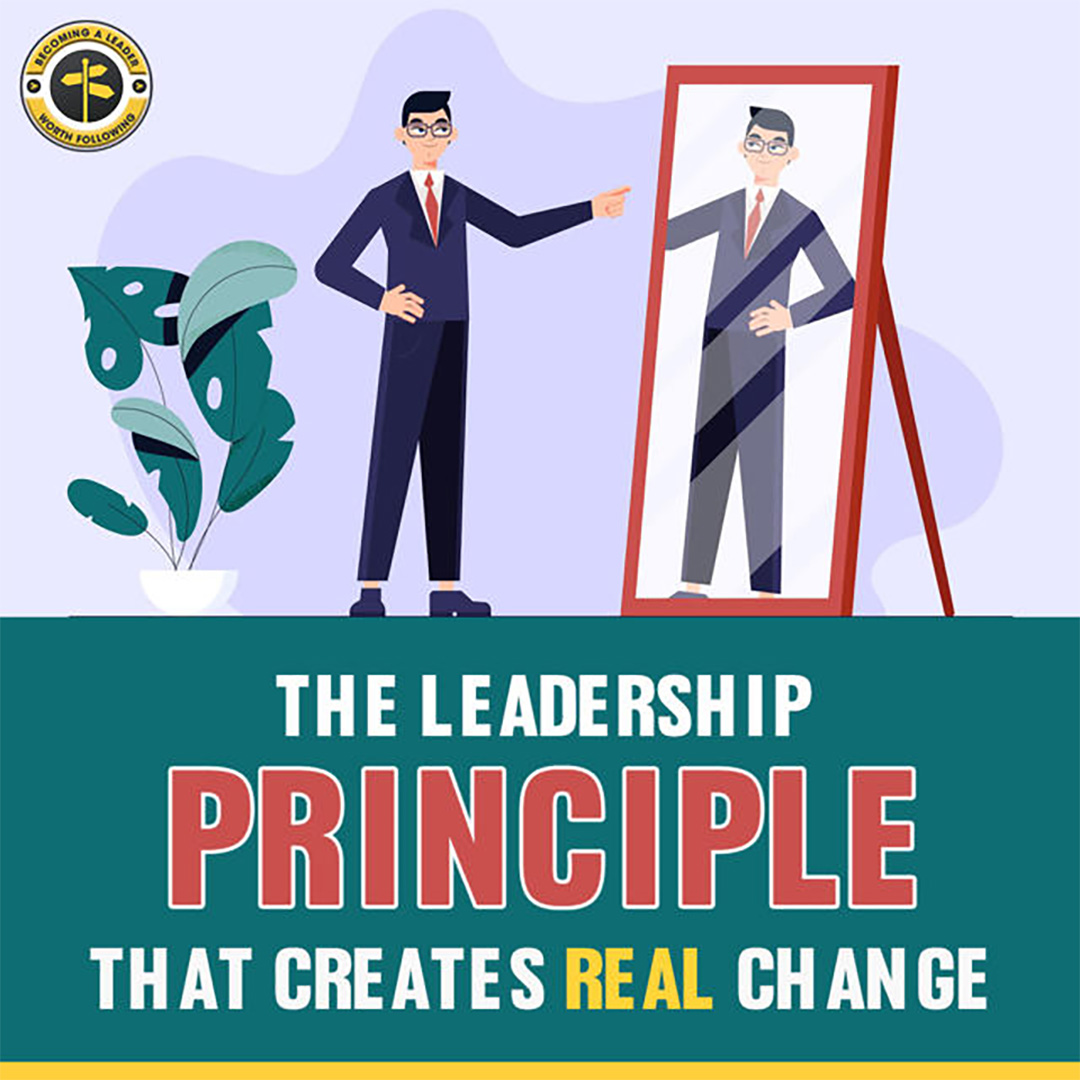
One of the hardest lessons for leaders to accept is that the first person they need to look at when facing a challenge is themselves.
This does not mean leaders are always the problem. There are situations where an employee, a process, or an outside circumstance is the true source of an issue. Good leaders still need to hold people accountable and recognize when change needs to happen elsewhere.
However, before pointing outward, effective leaders take time to look inward and ask a simple question: What is my responsibility in this situation?
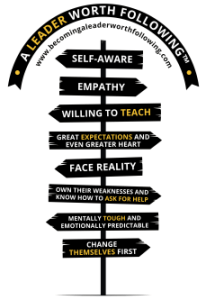
This principle is at the heart of becoming a leader worth following: change yourself first.
Leadership Starts With Setting the Example
A leader’s actions communicate more than their words ever will.
If an organization needs to reduce expenses, a leader should be willing to examine their own habits and make changes first. If a company is facing difficult decisions, such as a wage freeze or significant sacrifices, leaders should not ask others to carry a burden they are unwilling to share.
People pay attention to what leaders do when things get difficult. They notice whether leaders stand alongside them or simply give instructions from a distance.
Leadership requires being willing to experience the challenges you ask others to face.
The same applies to growth and improvement. If you want your team to develop new skills, embrace learning, or adapt to change, you have to model that behavior yourself. The best leaders demonstrate the standards they expect from others.
The Importance of Lifelong Growth
Changing yourself first is not about admitting that you are always wrong. It’s about recognizing that leadership requires continuous growth.
The best leaders remain lifelong learners. They continue developing their skills, expanding their understanding, and becoming better versions of themselves.
Every leader has room to improve. There is always another perspective to consider, another skill to develop, or another way to better serve the people around them.
When leaders believe they have nothing left to learn, they limit their ability to lead effectively. Growth stops when curiosity disappears.
A strong leader regularly asks:
- What can I do differently?
- What part of this situation is within my control?
- How can my actions help move my team forward?
Those questions create opportunities for improvement.
Leaders Cannot Change Other People, But They Can Influence Them
A common frustration among leaders is trying to change employees, teams, or entire organizations.
The reality is that leaders cannot directly control other people’s choices. They cannot force someone to become more motivated, more engaged, or more committed. What they can do is create an example worth following.
From a counseling perspective, one of the biggest turning points for people is realizing they cannot change others. They can only change themselves. The same idea applies to leadership. A leader cannot single-handedly change a company culture. They cannot instantly transform an environment. They cannot make every person respond exactly how they want.
But they can take responsibility for their own actions.
They can communicate better. They can listen more intentionally. They can improve their own habits. They can demonstrate the behaviors they want to see from their team.
Small changes from a leader can create momentum throughout an organization.
When Leaders Look Inward, Teams Move Forward
The mindset of “everyone else is the problem” prevents growth.
When leaders assume they have nothing to change and that everyone else needs to improve, they miss an important opportunity to influence the situation.
There is almost always something a leader can do.
That does not remove accountability from employees or excuse poor performance. Leaders should still address problems directly and make necessary decisions. But the strongest leaders understand that their own example is one of their greatest tools.
Change begins with the person who has the ability to start it.
The question is not always, “Who needs to change?”
A better question is:
“What is one thing I can do to move this team, this organization, or this situation in the right direction?”
That is where leadership begins. When leaders are willing to change themselves first, others are more likely to follow.