

In leadership, reflection is more than just an act of self-evaluation; it’s the cornerstone of growth, empathy, and resilience. The most effective leaders don’t simply lead others; they also lead themselves with curiosity, courage, and care.
So, what reflective question should leaders be asking themselves on a regular basis?
“What am I not seeing?”
According to leadership experts, this simple yet powerful question embodies one of the most important leadership traits: curiosity. Curiosity helps leaders avoid reactive emotions like frustration, annoyance, or anger. Instead of being quick to judge, curious leaders dig deeper to understand why something is happening, whether it’s a team issue, a performance gap, or even an internal struggle.
When leaders approach situations with curiosity rather than control, they open the door to learning, empathy, and better decision-making.
Curiosity Begins with Self-Reflection
Curiosity isn’t just about understanding others; it starts with understanding yourself. Great leaders regularly turn that same curiosity inward:
- How am I showing up today?
- What impact am I having on my team?
- Am I leading with both strength and compassion?
Self-reflection helps leaders maintain balance, but it’s important not to overdo it. Overanalyzing every action can lead to self-doubt. The key is to create structure and intention around reflection so it becomes a source of strength, not stress.
The Foundation: Self-Care for Leaders
Before leaders can effectively reflect on their leadership style, they must first ensure they’re taking care of themselves. Strong self-care practices provide the energy and stability needed for effective leadership.
Consider these six dimensions of self-care:
- Physical – Prioritize rest, nutrition, and movement.
- Emotional – Acknowledge your feelings, but without letting them dictate your actions.
- Spiritual – Stay connected to your values and purpose.
- Intellectual – Keep learning and challenging your mind.
- Social – Build strong, supportive relationships.
- Recreational – Make time for fun and relaxation.
These areas create the foundation for sustained leadership and meaningful reflection. You can explore more about these principles in Becoming a Leader Worth Following, a framework designed to help leaders grow with intention and authenticity.
Reflecting on Leadership Tenets
Once you’ve established a healthy rhythm of self-care, it’s time to reflect on how you lead. Ask yourself:
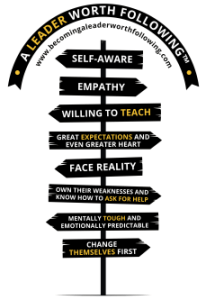
- Am I being self-aware and empathetic?
- Am I balancing toughness with tenderness?
- Am I facing reality, even when it’s uncomfortable?
- Am I willing to ask for help and listen to others?
These questions align with the tenets of becoming a leader worth following, someone who leads with clarity, integrity, and compassion.
The Hardest and Most Important Step: Be Willing to Change Yourself First
Reflection without action is just thought. The most transformative part of self-reflection is the willingness to change yourself first.
It’s easy to assume others or circumstances need to change, but true leadership starts with owning your growth. When leaders model that humility and adaptability, it inspires the same behavior in their teams.
So, after every reflection, ask yourself:
Am I willing to change myself before expecting change from others?
Final Thoughts
The best leaders aren’t the ones with all the answers; they’re the ones who never stop asking the right questions. By approaching leadership with curiosity, care, and courage, you’ll not only grow as a person but also become the kind of leader people genuinely want to follow.