

Avoiding the “Meeting After The Meeting”
What does your team say about you when you’re not in the room? It’s an interesting leadership question, but there may be a better question to ask:
Are you giving your team enough opportunity to speak before decisions are made?
Leadership often requires making difficult decisions. Some choices involve competing priorities, limited information, or significant consequences for the organization and the people within it. Ultimately, the leader may have to make the final call and accept responsibility for the outcome. But that doesn’t mean the leader should make every decision in isolation.
Involve Your Team Before You Make the Decision
Strong leadership involves creating opportunities for people to contribute before an important decision is finalized. That can mean asking your staff for feedback, consulting trusted advisors, gathering different perspectives, or simply giving your team the space to raise concerns and offer ideas.
The goal isn’t to make everyone responsible for the decision. The leader still has a responsibility to make the final call when necessary. The goal is to make sure the decision is informed by the people who will be affected by it. When leaders take the time to listen, they may uncover information they didn’t have, identify potential problems earlier, or see an issue from a completely different perspective. That input can lead to better decisions.
Beware of the “Meeting After the Meeting”
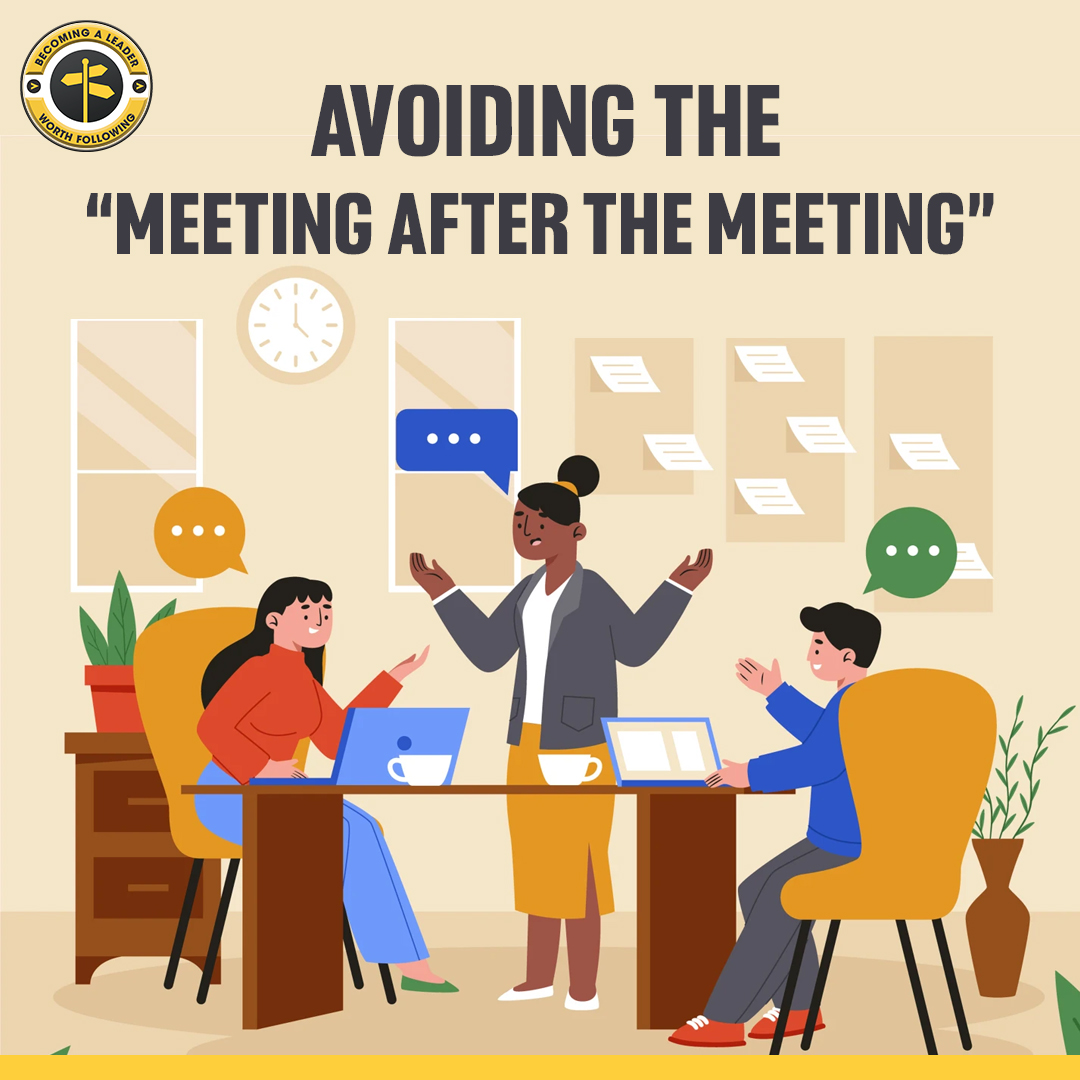
When people don’t have an opportunity to discuss a decision beforehand, they often find another opportunity to discuss it afterward. This is what happens in the “meeting after the meeting.” A staff meeting ends. The leader has explained the decision. Everyone leaves the room, and then the real conversation begins. People start asking questions they didn’t get to ask. They share concerns they didn’t feel comfortable raising. They discuss what they think should have happened instead.
Some of that conversation is inevitable. People will have opinions, and leaders can’t control everything their team says. But leaders can influence whether those conversations are happening because people were never given a chance to participate in the first place. Creating space for honest input before a decision is made can reduce that disconnect.
You Don’t Need to Make the Perfect Decision
One of the challenges of leadership is accepting that there may not be a perfect answer. Leaders regularly manage trade-offs and competing priorities. A decision that benefits one area may create challenges somewhere else. Sometimes there simply isn’t an option that makes everyone happy. That’s part of the job.
The expectation shouldn’t be that every decision will receive unanimous approval. Instead, leaders should focus on making thoughtful, informed decisions and being willing to take responsibility for the results. That responsibility matters. After gathering feedback and considering different perspectives, the leader ultimately has to be willing to say, “This is the decision we’re going to make, and I’m responsible for it.”
Focus on What You Can Control
It’s easy for leaders to spend too much time wondering what their team thinks about them. Are they happy with the decision? Are they talking about it afterward? Do they agree with me? What are they saying when I’m not there? Those questions can quickly become a distraction.
A leader’s job isn’t to control every conversation that happens outside the room. It’s to create an environment where people have a genuine opportunity to be heard before important decisions are made. That means asking for input, listening to criticism, and considering perspectives that challenge your own. And when the time comes, it means making the decision and accepting responsibility for the outcome.
Better Leadership Starts Before the Decision
If you want to build a team that trusts your leadership, start by looking at your decision-making process.
Before making an important decision, ask:
- Who needs to be involved?
- Whose perspective am I missing?
- What feedback would help me make a better decision?
- Have I created a safe opportunity for people to disagree?
- Am I willing to listen, even if the feedback changes my mind?
- Once the decision is made, am I prepared to take responsibility for it?
You may still have a meeting after the meeting. And that’s okay. You can’t control every opinion or conversation. What you can control is whether your team had a meaningful opportunity to contribute before the decision was made.