


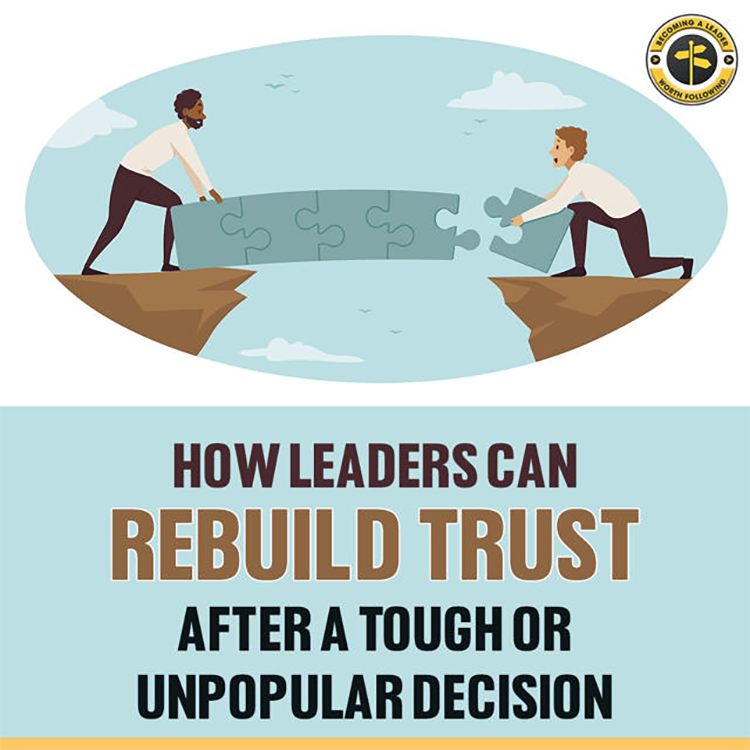
How Leaders Can Rebuild Trust After a Tough or Unpopular Decision
Trust is one of the most critical and fragile elements of effective leadership. It takes time to build, consistent effort to maintain, and only a moment to damage. For leaders, tough or unpopular decisions are inevitable. What matters most isn’t avoiding those decisions but how trust is rebuilt afterward.
So how can leaders restore trust when a decision doesn’t land well with their team? The answer lies in understanding that trust isn’t a one-time achievement; it’s an ongoing leadership practice.
Trust Is Built Over Time But Lost In An Instant
One of the biggest challenges in leadership is realizing that the things that make leadership effective are never “one and done.” You don’t check trust off a list and move on. Instead, trust requires continuous attention.
Trust is built through small, everyday actions:
- Consistency in behavior and decision-making
- Honesty, even when the message is difficult
- Follow-through on commitments
- Keeping people informed
These actions may seem minor on their own, but over time, they create a foundation strong enough to withstand setbacks, including unpopular decisions.
On the flip side, trust can be damaged quickly, especially when people feel blindsided, confused, or left out of the process.
Unpopular Decisions Don’t Automatically Break Trust
It’s important to understand this key leadership truth:
Just because people don’t like a decision doesn’t automatically mean trust is lost.
Trust begins to erode when decisions:
- Come out of the blue
- Aren’t explained or contextualized
- Feel inconsistent with stated values
- Leave people guessing about what happened and why
Leaders don’t need to predict every challenge or control every outcome. Sometimes circumstances genuinely arise without warning. What matters is whether leaders have already built enough trust to weather those storms.
The Role of Communication in Rebuilding Trust
When a tough decision has disrupted trust or threatens to, leaders must respond with clarity and honesty.
Start with sitting down with the team and addressing the situation directly. This isn’t about defending the decision at all costs. It’s about explaining:
- What happened
- Why the decision was made
- What constraints or factors were involved
- How the decision aligns with the organization’s values and goals
When people understand the why, even if they don’t agree with the outcome, trust has room to recover.
Lead With Empathy, Not Just Explanation
In some situations, rebuilding trust requires more than transparency; it requires empathy.
That doesn’t always mean apologizing for the decision itself. Instead, it may look like:
- Acknowledging the impact on the team
- Recognizing how unsettling sudden change can feel
- Naming the discomfort, uncertainty, or frustration people may be experiencing
Letting your team know that you understand what it feels like to have the “carpet pulled out from under you” goes a long way. Empathy helps people feel seen and respected, even in moments of disappointment.
Return to the Daily Practices That Build Trust
After the conversation has happened, the real work continues.
Rebuilding trust doesn’t come from a single meeting; it comes from returning to the core leadership behaviors that build trust over time:
- Communicating consistently
- Being honest and predictable
- Engaging thoughtfully with your team
- Keeping people informed, especially during change
These practices reinforce credibility and demonstrate that the tough moment wasn’t a pattern, but an exception handled with integrity.
Becoming a Leader Worth Following
Every leader will face moments where decisions are misunderstood, unpopular, or disruptive. What separates leaders who lose trust from those who strengthen it is how they show up afterward.
Trust is not about perfection. It’s about consistency, transparency, empathy, and follow-through. When leaders commit to these principles, even after difficult decisions, they continue their journey toward becoming leaders worth following.