


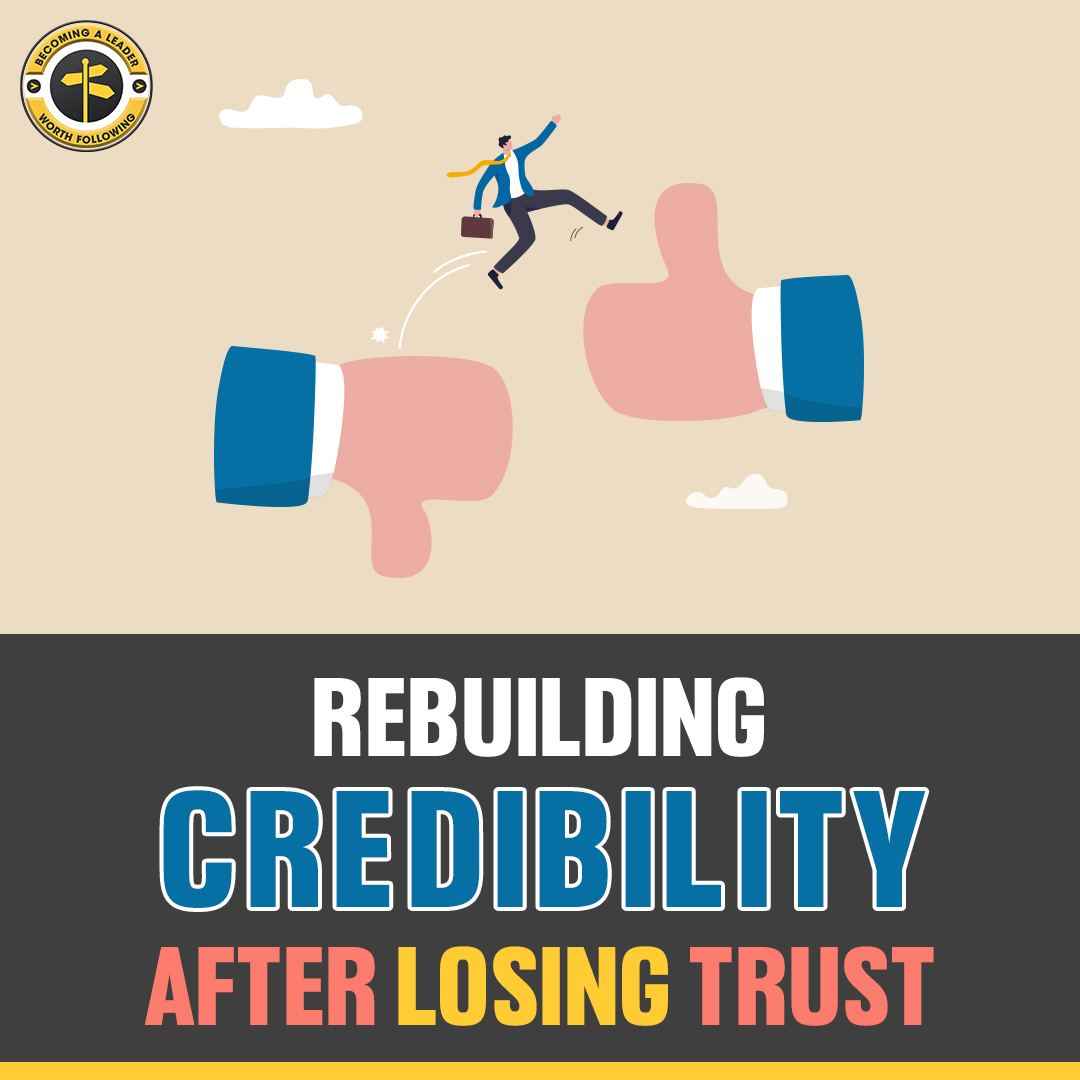
Rebuilding Credibility After Losing Trust
Credibility is one of the most valuable assets a leader can have. It influences how teams respond to direction, how stakeholders evaluate decisions, and how organizations move forward during challenging moments. Unfortunately, credibility can be lost quickly. A single mistake, broken promise, or lapse in judgment can damage the trust leaders work years to build.
The good news is that credibility can be rebuilt. However, restoring trust requires intentional effort, honesty, and consistent behavior over time. Leaders who approach this process with humility and transparency can gradually repair relationships and regain the confidence of their teams.
Below are practical steps leaders can take to rebuild credibility after trust has been damaged.
Understand That Trust Takes Time to Rebuild
One of the most important things to recognize is that rebuilding credibility will take longer than losing it. Trust can disappear in a moment. A missed commitment, poor decision, or failure to communicate can immediately raise doubts about leadership reliability. Rebuilding that trust requires patience and consistent actions that demonstrate change.
Leaders should avoid trying to rush the process. Team members will need time to observe new behaviors and decide for themselves whether trust can be restored. Acknowledging this reality sets realistic expectations and helps leaders stay committed to the long-term work of rebuilding credibility.
Start With Honest Accountability
The first step in repairing credibility is acknowledging the mistake. Many leaders make the situation worse by avoiding responsibility or offering vague explanations. When leaders refuse to own their actions, team members often interpret it as a lack of integrity.
Instead, leaders should clearly acknowledge what went wrong.
- Admit the mistake to yourself
- Admit the mistake to your team
- Take responsibility without shifting blame
Transparency demonstrates humility and self-awareness. It signals that the leader values honesty more than protecting their reputation. In many cases, a sincere acknowledgment of the mistake is the first step toward restoring damaged relationships.
Clearly Explain What Will Change
Admitting the mistake is only part of the process. Teams also need to understand how the leader plans to move forward. After acknowledging the issue, leaders should outline what they will do differently in the future. This includes clearly describing the actions, behaviors, or systems that will change.
- How decision-making processes will improve
- What communication practices will be implemented
- How accountability will be strengthened
The key is specificity. Vague promises to “do better” rarely rebuild trust. Teams want to see a clear plan that shows the leader has learned from the mistake. When people understand what change will look like, they are more likely to give the leader another chance.
Follow Through With Consistent Action
The most important step in rebuilding credibility is simple in theory but difficult in practice. Leaders must consistently do what they said they would do. Trust is rebuilt through repeated evidence. Each time a leader follows through on a commitment, they add another small piece back to their credibility. Consistency matters more than grand gestures. Small, reliable actions repeated over time show that the leader’s behavior has truly changed.
- Communicating openly and regularly
- Keeping commitments and deadlines
- Asking for feedback and responding to concerns
- Demonstrating accountability when problems arise
When teams observe these behaviors repeatedly, trust begins to grow again.
Accept That Some Skepticism Is Normal
Even when leaders take the right steps, some team members may remain skeptical. This reaction is normal. Trust is emotional as well as rational. People may need time to feel confident again, especially if the original mistake had a significant impact.
Leaders should not respond defensively to skepticism. Instead, they should stay focused on consistent behavior and continued transparency. Over time, actions will speak louder than words.
Focus on Long-Term Credibility
Rebuilding credibility is not about fixing a single mistake. It is about demonstrating the kind of leadership people can rely on moving forward. Leaders who succeed in restoring trust often emerge stronger than before. The experience forces them to practice humility, accountability, and intentional communication. These qualities strengthen leadership effectiveness in the long run.
- Admit the mistake.
- Explain what will change.
- Then consistently follow through.
Final Thoughts
Credibility is fragile, but a loss of credibility need not be permanent. Even when trust has been damaged, leaders have the opportunity to rebuild it through honesty, accountability, and consistent action. The key is recognizing that credibility is not restored through words alone. It is rebuilt through daily behavior that proves the leader has learned from the experience.
While losing trust can happen quickly, restoring it requires patience, humility, and commitment. In the end, credibility is rebuilt the same way it was originally earned: slowly and one action at a time.